

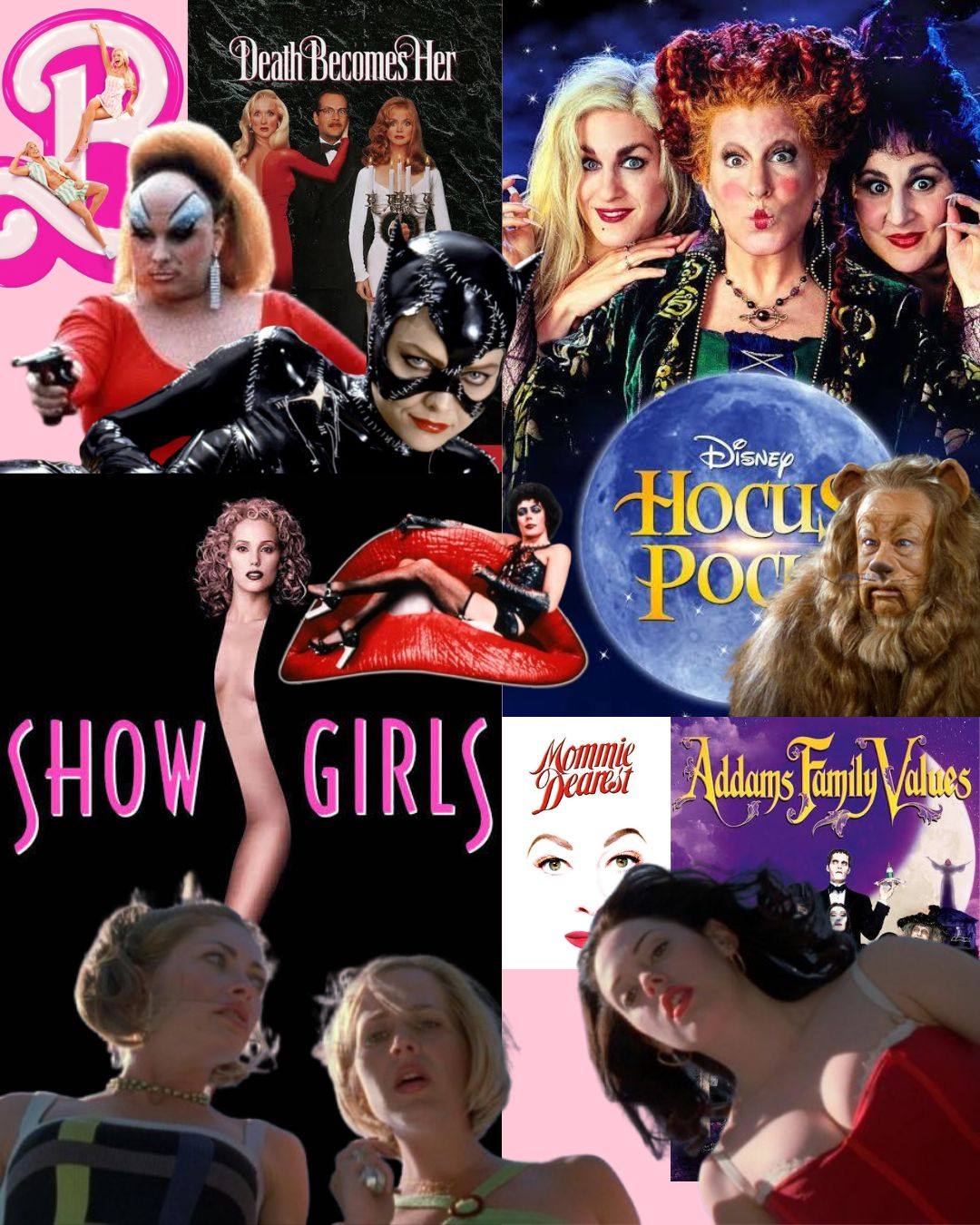
Camp is a notoriously difficult thing to define. It lives in exaggeration and provocation. Merriam-Webster describes it as “absurdly exaggerated, artificial, or affected in a usually humorous way.” Ultimately, camp is both self-aware and excessive; too glamorous, too dramatic, too theatrical, too kitschy, yet entirely purposeful in those endeavours.
The word itself is thought to come from the French se camper, meaning “to assume a bold or provocative posture.” Being camp is about performance. It is about standing out, embracing excess, and daring to be seen. Camp has long been tied to queerness, born from self-expression, rebellion, and irony, and eventually woven into the fabric of popular culture. To be camp is to play with the boundaries of taste, to take the ridiculous seriously and the serious ridiculously.
Exaggeration and provocation are the building blocks of camp cinema. These films are over-dramatic, often fantastical, and visually striking. They are sometimes described as “so bad they’re good,” but that misses the point. Camp is rarely accidental. It is not about poor acting; it is about deliberate exaggeration. Every gesture is big, every emotion amplified, every sequin and scream intentional. Camp cinema often explores themes of individuality and difference, with friendships and relationships that exist outside the heterosexual norm.
The Beginning of Camp Cinema
From the early 1900s to the 1960s
Camp has been part of cinema since its inception.
Early Hollywood loved spectacle and style, but films such as Shanghai Express (1932), Bride of Frankenstein (1935), and The Wizard of Oz (1939) celebrated theatricality and visual fantasy. Stories of self-acceptance and companionship beyond conservative or heteronormative ideals shaped early camp in a landscape already so rich with drama and hyperbole.
By the 1950s, Gentlemen Prefer Blondes (1953) brought camp glamour to the big screen through Marilyn Monroe’s exaggerated charm. Nearly a decade later What Ever Happened to Baby Jane? (1962) turned melodrama into performance art. It was cruel, tragic, and hilariously ironic. A perfect storm of hysteria and style that would influence generations of camp to come.
Prime Camp Cinema
The late 20th century
This is the era of true camp classics. A time of rebellion and self-expression that allowed excess and irony to flourish.
When people think of camp cinema, John Waters’ Pink Flamingos (1972) is often the first title that comes to mind. A film which is unapologetically filthy and proudly queer, turning bad taste into art. Soon after came The Rocky Horror Picture Show (1975), a cult-classic which became a cornerstone for pop-culture.
The 80s and 90s saw camp pushed further into the mainstream. Mommie Dearest (1981) gave us wire hangers and fury. Death Becomes Her (1992) made immortality cartoonish and glamorous. Batman Returns (1992), Addams Family Values (1993), and Hocus Pocus (1993) all embraced gothic humour and delightfully exaggerated villains.
Then came Showgirls (1995), a film that changed its lead actress’s life forever. Mocked upon release, Showgirls was criticised heavily for its gratuitous nudity and overt sexuality. However, in the decades to follow, it has been reclaimed as a masterpiece of excess and sincerity, becoming a campy-cult-classic in its own right.
A Move into Mainstream
Surrounding the turn of the new century
As cinema moved into the 2000s, camp became more self-aware and commercially viable. Clueless (1995) and Jawbreaker (1999) turned teen culture into glossy parody, while Moulin Rouge! (2001) revived the movie musical with wild romanticism and maximalist visuals.
Cinema at the time was fun and a little trashy, much like popular culture itself.
Even less successful releases such as Glitter (2001) and Scooby-Doo (2002) embraced their own ridiculousness, while Mean Girls (2004) and John Tucker Must Die (2006) delivered perfectly quotable, stylised takes on teenage melodrama. Mamma Mia! (2008) brought karaoke to the cinema, and Scott Pilgrim vs. the World (2010) blended comic book absurdity with a slice-of-life coming-of-age story.
These were not films designed to teach moral lessons or to be taken completely seriously. Their over-the-top nature and absurd plotlines made them fan favourites that continue to be loved today.
Modern Camp Movies
A post-internet world
In an era where Hollywood leans towards realism and prestige, camp still finds a way onto the big screen. Between subdued dramas and gritty realism are flashes of surrealism that remind us films can still be wild and fun simply for the sake of it.
Yorgos Lanthimos’s The Favourite (2018) fused historical drama with biting absurdity and queer humour. Cats (2019) was a fever dream of digital fur and misplaced earnestness. Birds of Prey (2020) brought out a chaotic rebellion soaked in femininity and colour. M3GAN (2022) turned a horror into meme without losing its storyline. And, finally, Barbie (2023). One of the most recent films to reintroduce camp to the mainstream, a fantasy-meets-reality story combined with a self-awareness that only camp cinema can achieve.
In Conclusion
Camp cinema remains one of my favourite things to watch. It is joyfully exaggerated, often ridiculous, and yet capable of tackling serious themes through humour and excess. Camp doesn’t ask to be taken seriously, but it often says something true about performance, identity, and desire.
But, as we venture through history, one question remains: Is camp dying?
While it is not as mainstream as it was throughout the late 20th century and early 2000s, camp performances will always have a place in cinema. Subversive, over-dramatic, and provocative films become big hits for a reason. They transcend time and master every genre, remaining enjoyable, relatable, and influential forever.
Besides, trends always swing back around. When audiences tire of muted realism, perhaps it will be time once again for absurd, theatrical cinema to take centre stage. Only time will tell.