

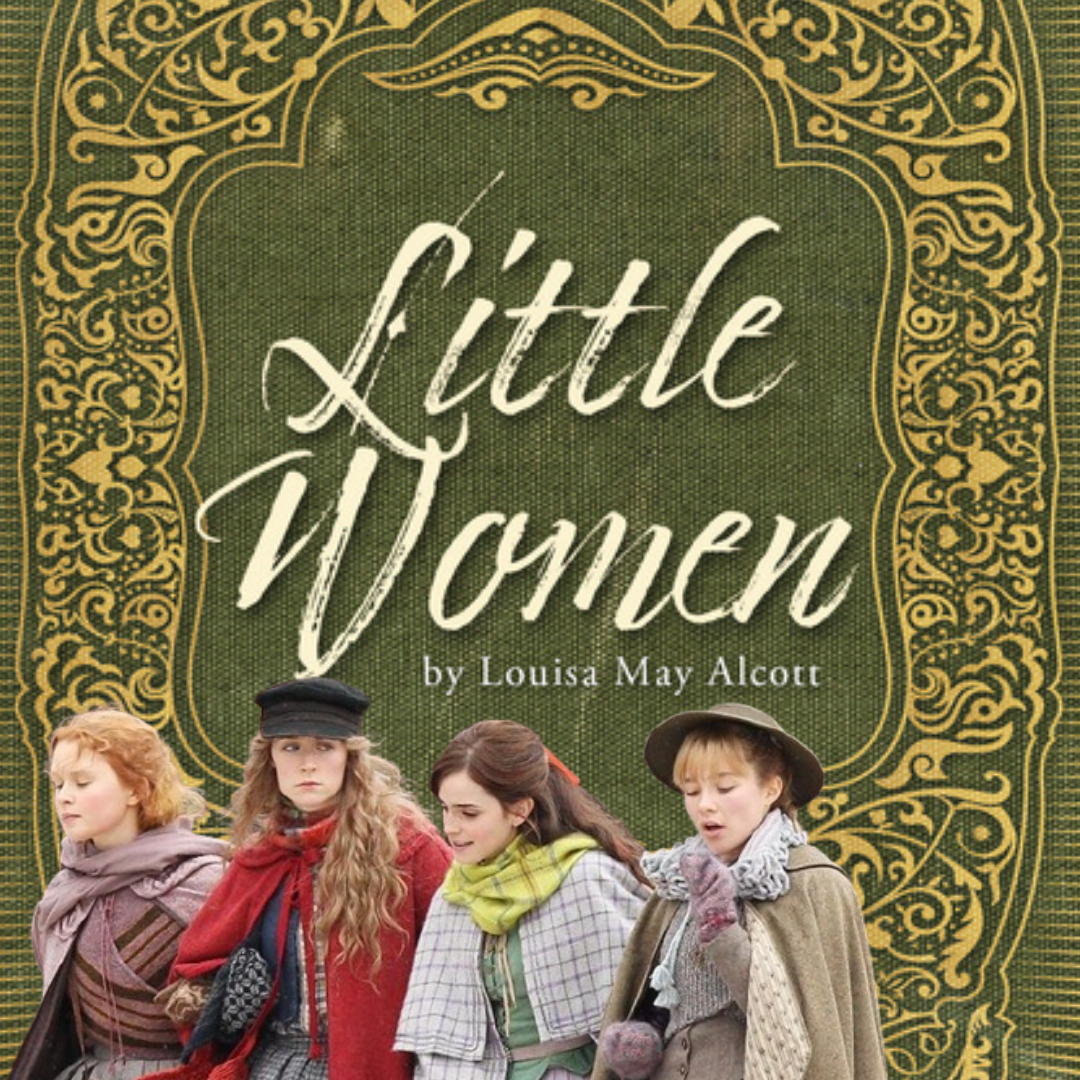
Louisa May Alcott’s Little Women is a timeless coming-of-age story that follows four sisters as they grow into womanhood. It is a book many people first meet in school, but it lingers far longer than the classroom. It explores love, ambition, family, and loss with warmth and sincerity, making it one of those rare stories that continues to resonate with readers across generations.
Greta Gerwig’s 2019 adaptation brings this beloved classic to a modern audience. It captures much of the original spirit while offering a new perspective, focusing more deeply on Jo’s story and her struggle between independence and intimacy. While the two versions share the same heart, they differ in tone, pacing, and emotional focus.
This piece includes some of my thoughts on the differences between the novel and the book.
The Novel
Each sister is given her own arc and personality, creating a story that feels full and balanced.
Meg is the eldest sister, she is sensible, mature and nurturing. Her story explores her early longing for luxury and refinement, and her eventual understanding that genuine love and a simple home bring more happiness than social status ever could. Her relationship with John Brooke shows her development from a girl who dreams of luxury to a woman who values sincerity and partnership.
Jo, the second oldest, is fiercely independent, ambitious, and strong-willed. She has big dreams of being a writer and refuses to conform to expectations placed upon women, namely those of becoming a wife and living subserviently. Her temper and stubbornness make her feel real and imperfect, and her journey revolves around finding fulfillment and balance in her dream life and her need for companionship.
Next, Beth, a gentle and timid soul. She is the heart of the March family, embodying goodness and compassion with her kind and selfless nature. Her death is a devastating moment for the family, marking the loss of the girl’s childhood innocence.
Finally, the youngest March sister, Amy. She begins a little vain and self-interested but grows into one of the most mature and reflective characters. Her creativity and artistic ambition mirror Jo’s in many ways, yet she is slightly more charming than her sister. Her growth throughout the novel is striking. She learns humility and patience without losing her sense of artistry or ambition. Her relationship with Laurie feels natural and earned, reflecting the maturity both characters gain as they grow older.
The novel’s beauty lies in how it weaves these stories together. The sisters’ relationships are the emotional core. Each of the older girls takes one of the younger under her wing, with Meg and Amy forming one pair, and Jo and Beth another. The closeness between Jo and Beth stands out most, and Beth’s death leaves Jo profoundly changed, facing loneliness for the first time. The story allows space for this grief to settle, showing how deeply their lives are intertwined. This respect and love between the sisters is one of the most rewarding parts of their relationships and a testament to Alcott’s sensitivity in writing complex female bonds.
The Film
Gerwig’s adaptation focuses more heavily on Jo’s perspective, both as a writer and as a woman navigating her independence. The film has a reflective quality, however, it also places Jo’s creative struggle and her relationship with Laurie at the forefront, making their romance feel more central than it does in the novel. The balance is shifted between the sisters compared to the book.
Because of this, Amy and Laurie’s relationship feels less organic on screen. It appears more sudden, as if Laurie uses Amy to deal with losing Jo, rather than gradually falling for her as in the book. In the book, time and distance help both characters grow separately before finding each other, making their union feel more believable.
The film’s pacing, though effective for modern audiences, compresses years of development into moments. This is understandable as several years have to be compressed into two hours. Using the same actors for both the girls’ youth and adulthood makes it harder to feel the passage of time, which the novel handles more gently and naturally.
Gerwig also trims certain moments from the book that deepen the sisters’ growth. Meg’s realisation about wealth and love, shown most clearly in the scene where she feels out of place being made up among wealthier women, is largely omitted. Similarly, the scene in which Amy and Jo share a moment at the fair, showing Amy’s maturity and Jo’s affection for her sister, is missing. These moments may be quiet, but they reveal so much about who the sisters are becoming.
Even with these omissions, Gerwig’s Little Women is a beautiful film. The performances by Saoirse Ronan, Florence Pugh, Emma Watson, and Eliza Scanlen are layered and heartfelt. Gerwig captures the emotional essence of Little Women, even as she reshapes its structure. The film feels comforting, familiar, and alive, even as it rearranges the story we know.
The Book VS The Film
The novel is slower, fuller, and more reflective. It lets each sister have her moment of growth. It offers a sense of intimacy that comes from following the March family over many years. The film, by contrast, is vibrant and emotional, giving Little Women a new rhythm and a fresh perspective.
Little Women is a story that lingers long after you finish it. Its themes of love, ambition, family, and self-discovery are as meaningful now as they were in Alcott’s time. The March sisters feel real in a way that few fictional characters do, their flaws only making them more beloved. Personally, I prefer the book for its patience, depth, and gentleness, but I cannot fault the film for its beauty and its ability to make a familiar story feel new again.